1979 Quarter in Circulation: Keep or Spend?
You receive change. And among other coins, you see a shiny 1979 quarter. Nothing looks unusual at first glance, but you stop to decide: should it be saved?
Most examples are ordinary. The metal is copper-nickel clad without a silver composition, so highly likely that you get no intrinsic premium. Large numbers were struck. Yet small details can change the answer. Thus, before deciding, confirm what you are holding.
Basic Specifications
Feature | Detail |
Year | 1979 |
Mints | Philadelphia (1979 quarter no mint mark), Denver (D mark), San Francisco (S). |
Composition | Copper-nickel clad |
Weight | 5.67 g |
Diameter | 24.26 mm |
Edge | Reeded |
Obverse | George Washington |
Reverse | Eagle |
Philadelphia coins from this era often appear without a visible mint mark. That is normal. It is not a missing mark error. It reflects the mint practice of the period.
Weight and diameter help confirm authenticity. Significant deviation usually signals damage or alteration, not rarity.
Identification comes first. Value comes later.
First Question: Is It Circulated?
Most 1979 quarters remain in heavy circulation condition.
Check the high points:
Washington’s cheek and jaw
Hair detail above the ear
Feather tips on the eagle
Rim sharpness
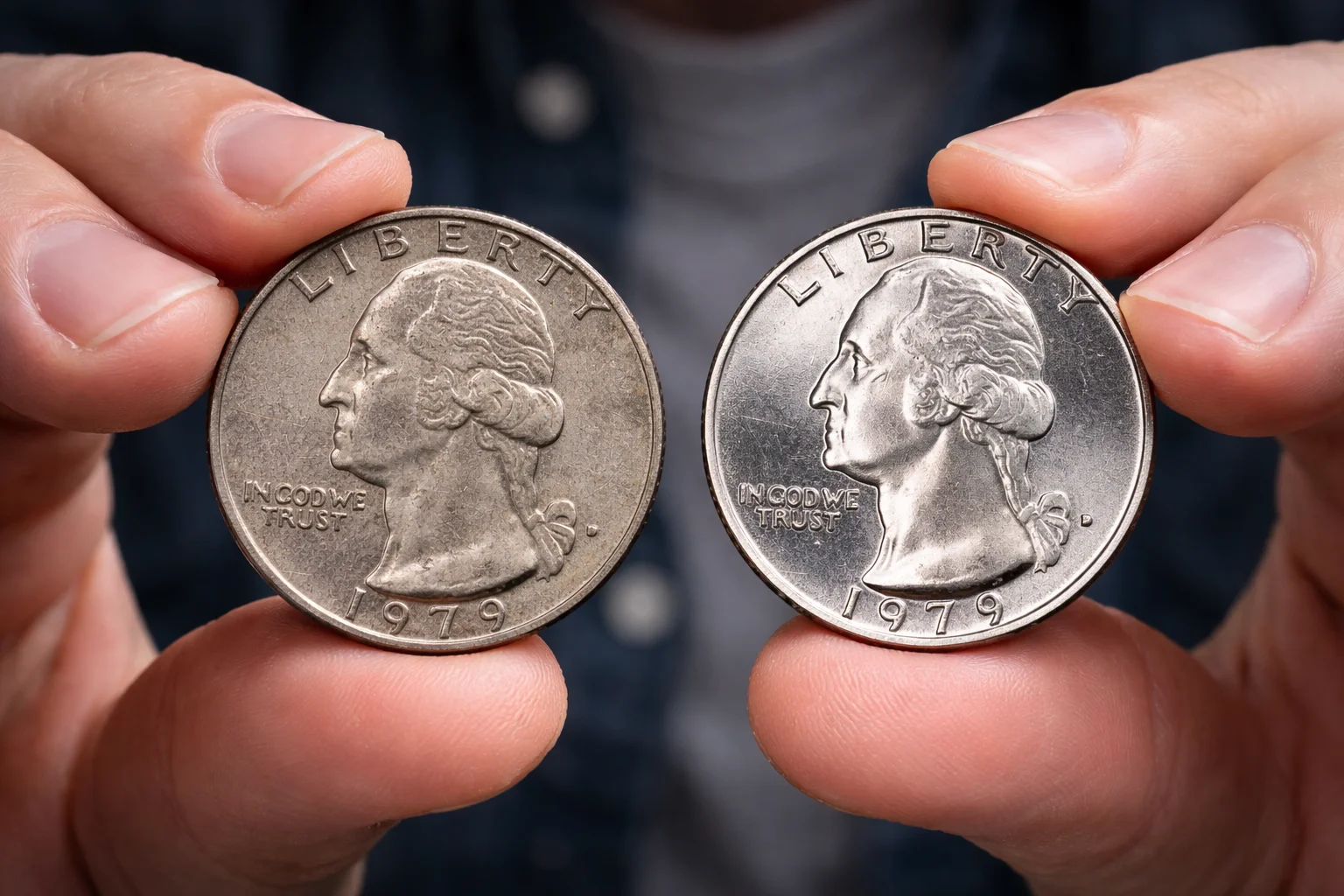
Circulation wear creates smooth, even flattening. The surface loses texture. Luster fades, and fine detail blends into the fields.
If the coin shows heavy wear, it is almost always worth face value. That is the reality of high-mintage years.
When Uncirculated Makes a Difference
An uncirculated 1979 quarter looks different.
Original mint luster remains.
Light reflects evenly across the surface.
High points are crisp.
No smoothing from friction.
Small contact marks may appear. They do not equal wear. They come from storage and transport in mint bags. Here, grade begins to matter more than date.
Mintage and Market Reality
Production in 1979 was massive. Both Philadelphia and Denver struck hundreds of millions. San Francisco produced proof coins.
This is not a key date.
It is not even a semi-key.
It is not scarce by mintage.
High minting numbers explain why circulated examples are everywhere. Survival rate in worn condition is high. Survival rate in top condition is lower, but still healthy, compared to rare issues. So, date alone does not drive demand.
Practical Price Overview
Grade | Typical Range |
Circulated | $0.25 |
AU | $0.50–$1 |
MS60–63 | $3–$8 |
MS64–65 | $10–$25 |
MS66 | $40–$80 |
MS67+ | Market dependent |
MS68 | Several hundred (rare cases) |
Large jumps occur only in very high Mint State levels. At MS67 and above, surface quality becomes critical. Tiny marks reduce price sharply.
An MS68 example can reach premiums. That does not reflect the rarity of the date. It reflects the rarity of preservation.
What About Real Errors and Their Value?
Most coins found in change are normal. Still, certain varieties attract attention. Only clear, distinct minting mistakes matter.
1979-D “Filled D” Mint Mark
On some Denver coins, the mint mark appears clogged. The “D” looks solid or distorted. This results from the die fill.
Light fill is common and usually minimal in value. Strong, clearly defined examples may carry a modest premium among variety collectors.
1979-S Proof Type 2
San Francisco produced proof coins in two mint mark styles.
Type 1 shows a filled or less distinct “S.”
Type 2 displays a sharp, well-defined mint mark.
PR70 DCAM examples of Type 2 can command high prices. These are not circulation finds. They originate from proof sets.
Condition and cameo contrast determine the premium.
Off-Center and Broadstrike Errors
Off-center strikes occur when the planchet is misaligned during striking. Part of the design may be missing.
Broadstrikes occur when the collar fails, causing spreading.
Strong, visible misalignment increases value. Minor shifts bring smaller premiums. Clear off-center examples often trade from $50 to $200 or more, depending on severity.
Lettering Errors (“In Cod We Trust”)
In some cases, the “G” in “God” appears weak or distorted. This usually results from die wear or clogging.
Minor distortions are common. Severe, clearly defined missing elements attract stronger interest.
Collectors focus on clarity, not minor softness.
Struck on Wrong Planchet
Rare cases exist where 1979 quarters were struck on nickel or foreign planchets.
Weight becomes crucial here. A noticeable deviation from 5.67 grams may signal such an error.
Authenticity must be confirmed professionally. When verified, these pieces can reach several hundred dollars or more.
Common Misconceptions
Many pocket-change “errors” are not valuable.
Minor machine doubling is common.
Light-filled letters carry little premium.
Weak strike is not a doubled die.
Circulation damage is not a mint error.
Only distinct, production-origin defects matter. What really matters: Clear separation lines in doubling; true metal displacement; visible structural shift.
Without those signs, the coin remains ordinary.
Tools Before You Decide
Before keeping or spending, verify details. For example, you can try digital tools for checking details. The best coin value app helps confirm the year, mint, and basic specifications quickly.
A practical app, such as Coin ID Scanner, allows you to:
Identify type
Confirm composition
Compare visual examples
Store notes in a digital collection
Review estimated value ranges
The app supports organization and basic checks. It does not replace grading skills. Surface quality and eye appeal still require direct visual judgment. But initial verification prevents assumptions.
Circulated vs Collectible: A Direct Comparison
Feature | Circulated | High Mint State |
Surface | Dull | Bright |
Detail | Soft | Sharp |
Luster | Gone | Intact |
Market demand | Minimal | Noticeable |
This difference explains most of the confusion. People often believe older coins automatically belong to lists of rare pieces. High mintage years behave differently. Preservation, not age, creates the premium.
So… Keep or Spend?
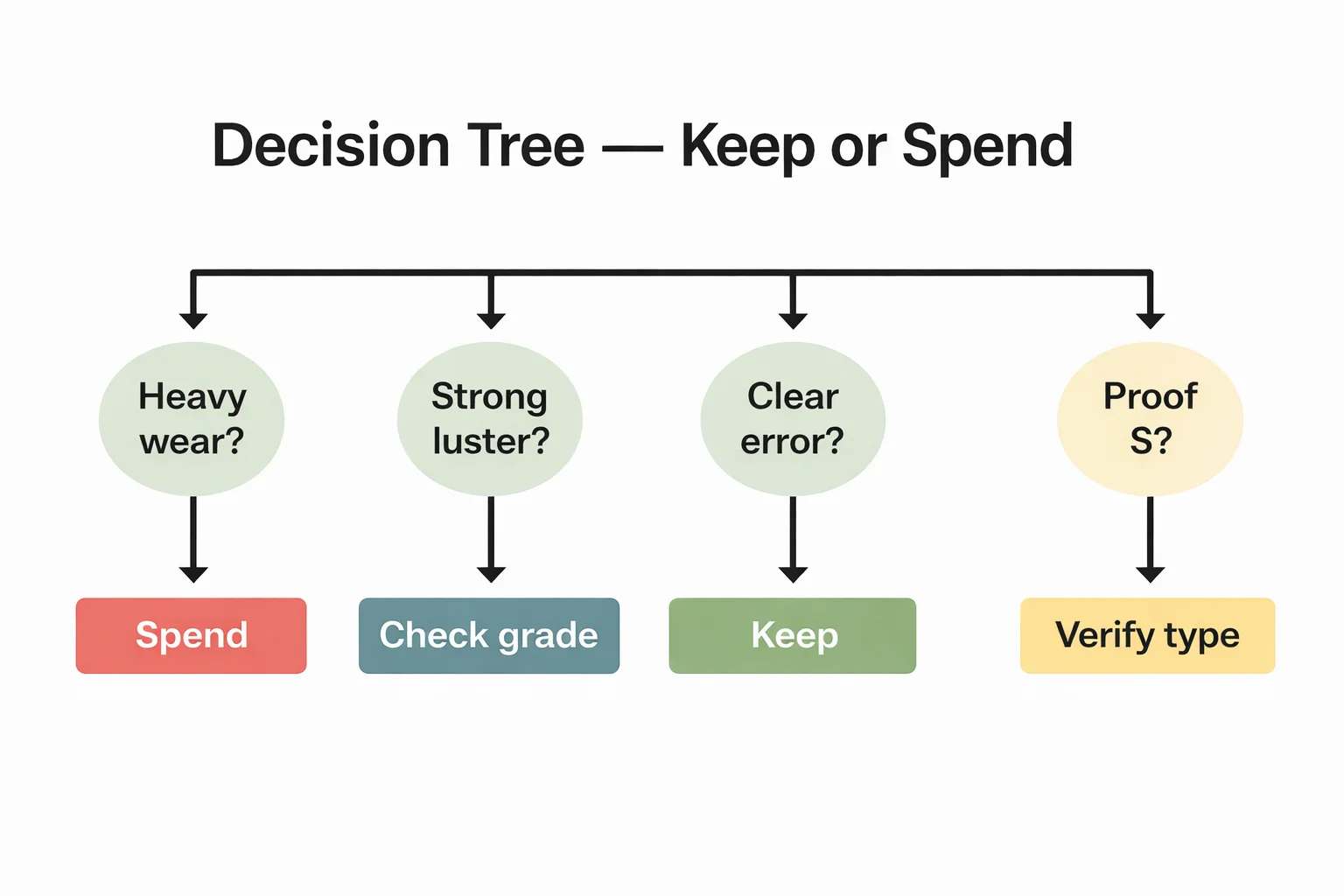
Spend it if:
Heavy wear
No visible error
Dull surfaces
Common grade
Keep it if:
Strong original luster
Minimal marks
Clear minting mistake
Proof Type 2
Exceptional grade potential
The decision takes less than a minute once you understand the criteria.
And remember that the 1979 quarter is a standard circulation issue. Most examples remain face value coins. Date alone does not create scarcity. To quickly decide whether the coin is worth spending and checking its estimated value, rely on the coin scanner app.
Understanding that difference and minting nuances separates routine change from a collectible find.